More dermatology capacity. Without more dermatologists.
DermaDetect is a software platform that health systems, payers and dermatology groups deploy to their own clinicians and referral networks — combining structured clinical intake, image analysis and physician-guided review to help routine dermatology cases move faster and route the right patients to specialists. DermaDetect is not a consumer app; it's licensed infrastructure your organization runs, under your clinicians' oversight.
New dermatology case
Turn dermatology intake into a structured, review-ready case.
DermaDetect is designed to sit inside the care pathway — not replace the clinician. The goal is to remove repetitive work, surface useful signal and preserve specialist attention for cases that truly need it.
Standardize the intake
Collect photographs and dermatologist-inspired history in a consistent format before specialist review begins.
Add decision support
Combine image analysis with structured clinical context to generate an AI-assisted differential for physician review.
Route with intention
Support remote resolution of appropriate routine cases while escalating uncertainty, out-of-scope cases and cases requiring examination.
From referral to resolution — without losing clinical oversight.
A workflow built for asynchronous dermatology, specialist triage and integration with existing healthcare systems.
Capture
Patient or referring clinician submits images and a structured history.
Organize
The platform standardizes case information into a concise review-ready synopsis.
Analyze
AI models assess images and context to support a ranked differential.
Review
A physician evaluates the case, recommendations and relevant uncertainty.
Resolve or escalate
Appropriate cases are managed remotely; others are directed to in-person care.
Treatment management
Track the prescribed treatment and follow up over time — useful signal for adherence, response, and future drug utilization patterns.
Automate the repeatable work. Keep the clinician at the center.
Each stage of a dermatology case gets better inputs because the stage before it already did the work: image analysis carries the intake context, review starts from an organized synopsis instead of a raw submission, and treatment sits on a structured record. That compounding is the design — and a clinician stays in the decision at every point that matters.
Vision
Submitted photographs are analyzed alongside the structured intake rather than in isolation, so image findings arrive with the history that explains them.
Documentation
Case information is standardized into a concise, review-ready synopsis, so a clinician opens an organized case instead of assembling one out of a submission.
Assessment
Image analysis and structured context together support a ranked, AI-assisted differential across 74 supported diagnosis classes, with anything outside the set routed to “other / refer.”
Treatment and follow-up
The physician makes the treatment decision. The platform then tracks the prescribed treatment and the response over time, instead of treating the prescription as the end of the case.
The parts of this that don’t come from a model.
A stack of AI features is worth having. It isn’t the whole argument. What makes a dermatology pathway safe to run at volume is the data underneath it, the escalation route out of it, the staffing model around it and the numbers an organization can actually verify afterwards.
Depth per class, not just a longer list
How many conditions a system names and how much evidence sits behind each one are different claims. All 74 supported DermaDetect classes are backed by thousands of labeled real-world images, drawn from a dataset of 400K images and 150K cases.
See the data foundation →A peer-reviewed result, not only a product demo
DermaDetect technology was evaluated for common non-cancerous dermatoses in a prospective multi-centre proof-of-concept study published in the European Journal of Dermatology.
Review the evidence →An “other / refer” route is part of the label set
Cases that don’t fit a supported class are routed out rather than forced into the nearest available name — the same discipline that keeps suspicious lesions, actinic keratosis and skin cancer screening on the in-person pathway.
Licensed infrastructure your organization runs
Not a consumer app. Health systems, payers and dermatology groups deploy DermaDetect to their own clinicians and referral networks, governed by their own protocols and clinical oversight.
A capacity model, not only a faster case
Well-structured, AI-supported cases can be staffed by a nurse practitioner, PA or GP working under dermatologist-defined protocols — a capacity gain that faster documentation alone does not deliver.
Time per case is a pilot endpoint, not a slogan
Time to complete a case, remote resolution rate, escalation rate and cost per completed case are measured against an organization’s current pathway using its own volume — before anyone attaches a percentage to it.
Model a pilot →Give routine dermatology a lower-friction pathway.
DermaDetect isn't trying to solve dermatology's hardest cases or replace an in-person scan or biopsy — those stay on the in-person pathway. The value is in volume: moving more of the routine caseload through faster, so more patients get seen and, when a prescription is needed, it reaches them quickly without slowing down care for the patients who need an in-person visit most. Structured, AI-supported cases also open the door to staffing virtual visits with a more efficient clinician — a nurse practitioner, physician assistant or general practitioner — under dermatologist-defined protocols, instead of requiring a dermatologist for every routine case.
Dermatology capacity calculator
A shrinking supply of dermatologists meets a growing market for capacity.
DermaDetect's business case starts with a structural problem: demand for dermatology is outpacing the number of dermatologists who can see patients, and that gap is the market this platform is built to help close for the organizations that license it.
DermaDetect isn't built for the hardest cases. That's the point.
DermaDetect doesn't try to solve dermatology's most complex cases or the ones that need an in-person scan or biopsy — actinic keratosis, suspicious lesions and skin cancer screening stay firmly in the "refer" pathway. The value is in the other ~70% of the caseload: the routine, high-volume conditions that make up most of what dermatology actually treats day to day. Getting more of those patients seen — and getting a prescription to them fast when one is needed — is where the capacity gain and the cost savings come from, without pulling attention away from the patients who need an in-person exam most.
Faster answers, less unnecessary travel
- Routine cases can be triaged in days instead of waiting 5+ weeks for a first available slot
- Fewer avoidable in-person visits for conditions that don't require a physical exam
- Clearer path to the right level of care — remote resolution or escalation to a specialist — rather than a long queue for every case
More completed cases per clinician hour — and a stronger P&L
- Structured, pre-organized intake cuts the administrative time a clinician spends before they can actually review a case
- The same dermatologist panel can resolve more referrals without adding headcount, directly increasing billable throughput
- Reserves in-person appointment slots — a clinic's scarcest, highest-value resource — for the complex and procedural cases that generate the most revenue per visit
System-wide capacity and cost savings
- External teledermatology benchmarks show meaningful reductions in avoidable specialist visits and per-referral cost (see Evidence below)
- Payers gain a lower-cost pathway for routine dermatology without expanding specialist supply
- Health systems get a measurable, poolable capacity asset they can allocate across sites rather than being capped by any single clinic's headcount
Built on real-world dermatology data, not a small demonstration set.
The expanded dataset is designed to support common dermatologic presentations at meaningful scale, with thousands of images behind every one of the 74 supported classes, while preserving an “other / refer” pathway for cases that do not fit a supported class.
Thousands of images per class, built for strong classification accuracy.
Each of the 74 supported classes is backed by thousands of labeled images, not a handful of examples, and DermaDetect’s expanded training approach includes a generic “other” class for diagnoses outside the supported label set. That creates a route for uncertainty and out-of-scope cases rather than forcing every image into a named condition.
74 diagnosis classes, organized the way a clinician thinks about them.
Select a body region to see its supported diagnoses, grouped by clinical category. A few also include externally published national statistics, clearly cited — click any name for details.
Clinical credibility should be visible, specific and sourced.
AI-assisted diagnostic performance for common skin diseases
A prospective multi-centre proof-of-concept study evaluated DermaDetect technology for common non-cancerous dermatoses. The published methods describe models developed from more than 100,000 real medical cases collected through DermaDetect teledermatology systems.
View the publication →of in-person dermatology clinic visits were avoided in a 700-patient Philadelphia store-and-forward teledermatology program.
External benchmark · JAAD / PubMed · not a DermaDetect resultmean cost savings per newly referred patient in a managed-care teledermatology triage model at Zuckerberg San Francisco General.
External benchmark · JAMA Dermatology · not a DermaDetect resultof unique teledermatology patients in a large Mayo Clinic review later required an in-person examination after the initial televisit.
External benchmark · Mayo Clinic experience · not a DermaDetect resultOne platform. Different operational value for each buyer.
DermaDetect can be positioned around the outcome each organization actually buys: capacity, lower cost, access, throughput and measurable routing performance.
Reduce specialist bottlenecks
- Virtual-first pathway for selected routine referrals
- Prioritize complex and procedure-dependent cases
- Measure resolution, escalation and time-to-review
- Integrate with existing digital workflows
Move routine care to a lower-cost pathway
- Expand member access without adding specialist supply
- Model cost per dermatology case and visit avoidance
- Reduce downstream delays caused by long wait times
- Define economic endpoints before pilot launch
Make specialist time more productive
- Review structured cases instead of raw submissions
- Use AI-assisted differentials as decision support
- Manage selected follow-up remotely
- Reserve office capacity for patients who need it most
Built by operators, clinicians, and AI healthcare veterans.
The people behind DermaDetect's platform, clinical validation, and commercial strategy.

Scott Sheps
Background in finance and technology operations: 8 years in public accounting, 5 years in travel tech (FinOps and platform development), and 5 years managing family office operating companies. Led DermaDetect's diligence and modernization with health tech and AI experts.
LinkedIn ↗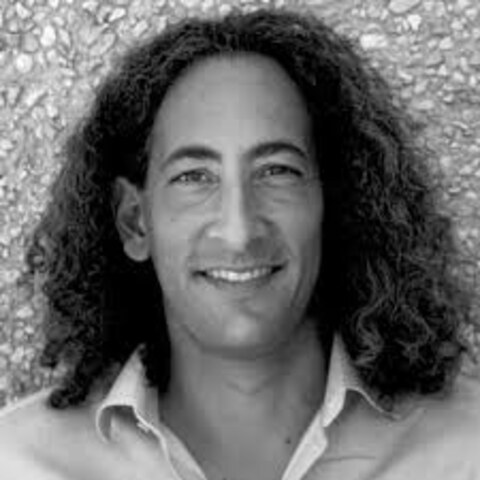
Dave DeCaprio
20+ years in AI and healthcare. Started on the Human Genome Project at MIT, then moved into pharma and population health. Founded ClosedLoop.ai in 2017, which won the $1.6 million AI Health Outcomes Challenge sponsored by CMS.
LinkedIn ↗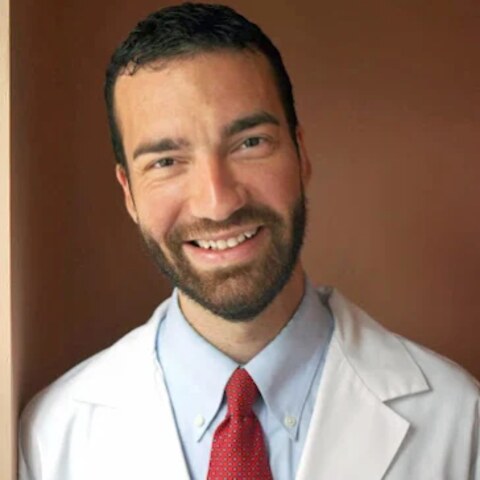
Dr. Brian Lester
Board-certified dermatologist (American Board of Dermatology) with 25 years in medical, surgical and cosmetic dermatology. Yale School of Medicine graduate; completed residency at Brown University/Rhode Island Hospital as Chief Resident. Past Board of Directors member of SkinPAC (AAD's political action committee) and the Massachusetts Academy of Dermatology; past member of the AAD Delegation to the American Medical Association.
Dr. Josh Abersman
Board-certified dermatologist at Cleveland Clinic, conducting clinical and basic-science research in melanoma genetics and melanoma drug development. Trained at the University at Buffalo School of Medicine, completed dermatology residency at University Hospitals Cleveland Medical Center, and a postdoctoral fellowship in Molecular and Investigative Dermatology at Case Western Reserve University. Member of the American Academy of Dermatology.
LinkedIn ↗What would 20% more usable dermatology capacity mean to your system?
Start with your referral volume, average wait time, cost per specialist visit and current triage pathway. We’ll model a pilot around measurable clinical and economic endpoints.
About this condition
National frequency
Care-pathway role
Structured history and clinical images can support remote review and triage, subject to clinician judgment and pathway rules.
Escalation
Uncertain, atypical, severe or out-of-scope presentations should be routed for appropriate in-person or higher-acuity evaluation.